Shockwave/ESWT
What is Shockwave?
Shockwave Therapy (also called ESWT Extracorporeal Shockwave Therapy) is a non-invasive treatment that uses acoustic (sound) waves to stimulate the body's natural healing response. These waves deliver mechanical energy into tissues, helping activate cellular repair processes, improve circulation, and promote tissue remodeling.
Unlike treatments that simply mask symptoms, shockwave therapy works by encouraging the body to repair and regenerate damaged or dysfunctional tissues.
How Does Shockwave Work?
When shockwave energy enters the tissue, it creates a biological response that may:
Increase blood flow and circulation
Stimulate new blood vessel formation (angiogenesis)
Activate cellular repair mechanisms
Promote collagen production
Support nerve healing and regeneration
Reduce chronic inflammation
Break down scar tissue and fibrosis
Improve tissue flexibility and function
Stimulate the release of growth factors involved in healing
Types of Shockwave Available at Restore
Radial Shockwave
Delivers acoustic energy over a broader treatment area and is commonly used for muscle, tendon, and soft tissue conditions.
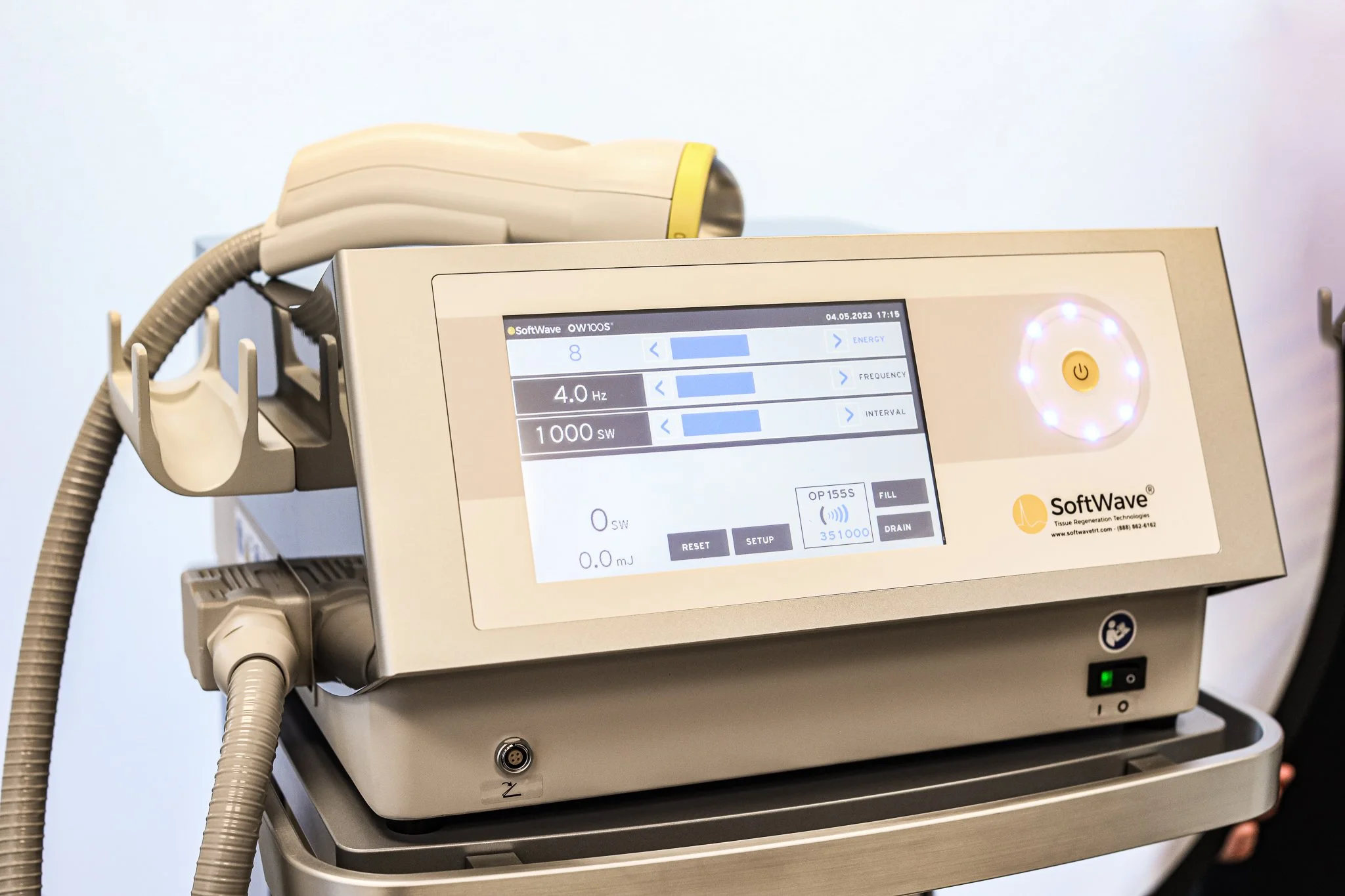
SoftWave Broad- Focused ShockwaveTherapy
An advanced electrohydraulic shockwave technology that produces broad, unfocused acoustic waves designed to stimulate healing, improve blood flow, and support tissue regeneration. Click here for more information softwavebenefits.com
What’s Happening Inside the Body
Potential Effects of Shockwave According to Research
Increased Blood Vessel Formation (Angiogenesis)
Stimulates growth factors involved in new blood vessel formation
Improves circulation to damaged tissues
Enhances oxygen and nutrient delivery
Stimulation of Growth Factors
May increase signaling molecules involved in healing, including:
VEGF (vascular endothelial growth factor)
eNOS (endothelial nitric oxide synthase)
PCNA (cell proliferation marker)
BMPs involved in tissue repairpening Inside the Body
Improved Microcirculation
Increases local blood flow
Supports tissue metabolism
Helps remove waste products from injured tissue
Reduction of Neurogenic Pain
May reduce pain signaling from irritated nerves
Can decrease substance P and other pain mediators
Helps calm chronic pain pathways
Breakdown of Fibrotic Tissue
May help remodel scar tissue
Improves tissue mobility and elasticity
Can reduce soft tissue restrictions Body
Cellular Activation
Creates a mechanotransduction response
Converts mechanical energy into cellular signaling
"Turns on" healing pathways within cellsy
Collagen Production
Stimulates fibroblast activity
Supports collagen synthesis
Promotes stronger, healthier tissue remodeling
Nerve Regeneration Support
May stimulate nerve repair pathways
Can improve nerve function and conduction
May support recovery of injured peripheral nerves
Being studied for neuropathy and nerve-related conditions
Activation of Stem Cells
Research suggests shockwave may attract and activate endogenous stem cells
Supports tissue remodeling and repairpening Inside the Body
Tendon and Ligament Remodeling
Encourages repair of degenerative tendon tissue
Supports tendon regeneration
Helps improve tissue quality and function
Anti-Inflammatory Effects
Helps shift chronic inflammatory environments toward healing
Supports resolution of persistent inflammatione Body
Increased Nitric Oxide Production
Supports blood vessel health
Improves circulation
Important in tissue repair and erectile function
dImproved Mitochondrial Activity
Supports cellular energy production
Enhances tissue recovery